Re-envisaging Professional Curiosity & Challenge
Why re-envisage Professional Curiosity?
Professional curiosity is a communication skill, which aims to explore and understand what is happening within a family or person’s life, rather than making assumptions and accepting accounts, events or disclosures at face value. Learning reviews published within the safeguarding arena for both adults and children, often use the term ‘professional curiosity’. Professional Curiosity is a high level concept that may feel disconnected from the nuances of day to day practice. The term can sometimes be used as an easy ‘catch all’ – which may not consider any other factors affecting our working life. Personal, organisational and political factors are so intertwined with our capacity and ability to effectively support and safeguard those who are at risk or have increased vulnerability, that these factors cannot be forgotten. They are also frequently accompanied by highly-emotional, stressful and complex situations too. When reviewing with the benefit of hindsight, learning reviews often conclude that professionals ‘should’ have known about aspects of a person’s life. But how can we know everything, especially if someone has chosen to withhold elements of their life experiences from us? This may happen for a variety of reasons, such as fear, stigma or shame.
Many professionals report finding the concept of professional curiosity difficult to implement within their daily practice – it can be a fine line between being curious vs intrusive or prying. We all work in a world of uncertainty, particularly when working in safeguarding. It can be difficult to connect abstract review findings which look back with the benefit of hindsight, to wading forwards through complex caseloads, experiences and challenges – you don’t know what you don’t know! It is not necessarily about asking someone lots of questions, but thinking about how to shape the questions to elicit the required information. This is not just another training session, it is a package of learning, aiming to truly embed the concept of professional curiosity by sharing learning, sparking conversations and supporting us all to think more curiously.
Embedding the Learning in Three Stages
This learning journey is designed to support and embed professional curiosity in real terms. By applying the term to specific topics, we hope to jointly explore and share meaningful, real life examples and experiences.
It will be split into three key parts.
- The first will be a series of online learning events. Guest speakers will join us for a half day launch event for each topic, followed by a series of lunch and learns, that will be recorded and uploaded to the platform in case you cannot make the live session. Please scroll down the page for a link to our first topic.
- The second is a 5 step, quick use tool for use within our daily practice to support and enhance reflective activity.
- The third aspect will be a series of Roundtable Discussions, where we will join together for interactive discussions about our experiences.
Throughout the learning, we will take a ‘lens’ of professional curiosity and apply it to real life topics. These topics are the ones that feature most predominantly within learning reviews from across all of the partnerships. Embedding the learning is designed to break down the gaps, transitions and silos that may occur, to bring all the work from across all of the partnerships in Surrey, into one central place for all-age safeguarding learning. This learning will roll annually, it’s not just a one off. Over the next few years, we are hoping to create an online repository, a one-stop shop to learning across the partnership, where we can share, showcase and signpost the amazing work that is being undertaken across the county, so everyone – regardless of role, experience or professional organisation can join us.
5 Steps to Embedding Professional Curiosity in Surrey
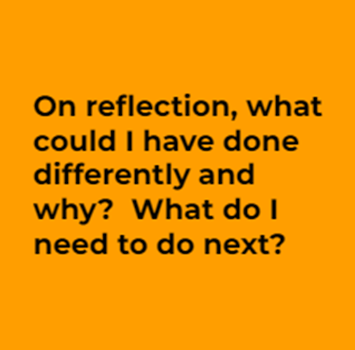
In conjunction with the learning events, members of various groups across the Surrey networks have joined together to create a shared tool. To support us all, whatever your level of experience, expertise or accountability we have designed 5 easy to use questions that can support anyone, working in any role to ‘think curiously’ about the work they encounter. These questions can be used for personal reflection, supervision, line management, team meetings or anywhere that impacts our service users.

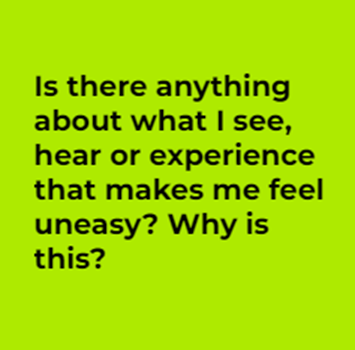
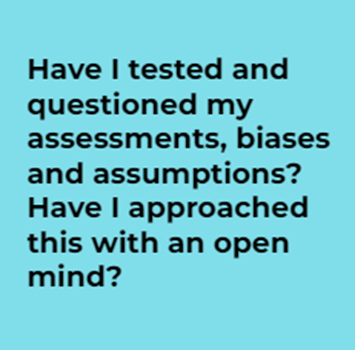
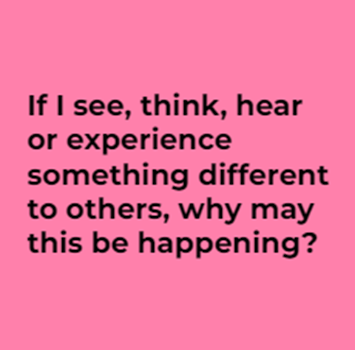
Click here to download and print the questions
Roundtable Discussions
Within each topic, we will also be running a series of Roundtable discussion events where we can reflect upon and discuss experiences as a rich and diverse multiagency collective. All sessions will be kind, focused on sharing of experiences and utilising a strengths based approach. We would kindly ask that you come prepared to keep your camera on throughout and to share in the discussions, whatever your levels of experience, so that everyone can see each other, learn from all of our experiences and to promote psychological safety within the event.
Please note, all events will be recorded so they can be shared wider for further learning.
We look forward to seeing you soon at one of the events!
Caring for Families Through the Work We Undertake and the Learning We Share
At the core of all we do across both the Surrey Child Death Review and Surrey Safeguarding Children Partnership is a deep respect and acknowledgement of the devastation for families following the death of their child, who remain central to all we do. We aim to learn from all deaths in a trauma-informed way.
The following learning, discussions and documentation are designed for professionals who are best placed to support prevention work for the future, along with those who are navigating these difficult and traumatic events. This in turn may create learning that may appear factual or cold in its approach. This is not our intention, but this data and information gathering supports us to understand the risks. It is necessary that we collectively continue to promote evidence-based practice, which is factual and research based, which in turn, may be perceived to have removed much of the emotional resonance and impact. We need to understand the data and use it to interpret the evidence, since the data tells us about the prevention challenge and whether the risk is changing.
Preventing the sudden and unexpected deaths of children and young people is a complex issue that requires a collective and multifaceted approach. There are numerous factors that may influence these deaths, and our collective understanding of why these deaths occur is still subject to ongoing research. There are many organisations and institutions working to prevent the deaths of babies, children and young people, and we hope in years to come that we may be able to better understand the reasons, be able to support families with answers, and increase our shared knowledge to prevent future deaths.
Thank you for your understanding, time and participation with supporting this ongoing work.
Click here for an overview and early findings of this work